
---
title: Climate change now top threat to natural wonders
description: "The IUCN's latest report highlight how one-third of the 83 natural World Heritage sites are now threatened by climate change: a major threat to nature as well as people."
image: https://latest.earthhour.org/hubfs/Large_WW1124463.jpg
---

[![WWF_Logo_RGB_100x88.89_small](https://latest.earthhour.org/hs-fs/hubfs/WWF_Logo_RGB_100x88.89_small.png?width=90&height=101&name=WWF_Logo_RGB_100x88.89_small.png "WWF_Logo_RGB_100x88.89_small")](https://www.panda.org)

This is a search field with an auto-suggest feature attached.

- There are no suggestions because the search field is empty.

- **×
- en**
  
  ×
  
  Country


  Language
  
  English
  
  Spanish


  CONFIRM
- [GIFTS](http://wwf.panda.org/virtual_gifts/)
- [Donate to WWF](https://wwf.panda.org/support_wwf/)

# Climate change now top threat to natural wonders

Posted on 03 December 2020

WWF has long highlighted how the climate crisis is a major threat to nature as well as people. And so, it is no surprise, although intensely worrying, to learn from a new report that climate change is now the biggest threat to UN-protected natural treasures.

The report, published by IUCN (International Union for Conservation of Nature), shows that one-third of the 83 natural World Heritage sites are now threatened by climate change.

This includes the world’s largest coral reef system, the Great Barrier Reef, in the eastern coastal waters of Australia. The reef, which has suffered three mass coral bleaching events in just the past five years, is one of the sites found to be at most risk from climate change.

The Pantanal, which is the planet’s largest tropical wetland, is another case in point. A critical resource for local communities in Brazil, Bolivia and Paraguay, and a home to over 4,000 species, the region has been severely impacted by wildfires, driven in part by climate change.

We have seen some positive progress in efforts to protect individual natural World Heritage sites. For example, WWF support helped lead to the governments of Brazil, Bolivia and Paraguay signing a landmark deal in 2018 to conserve and sustainably use the Pantanal.

However, much more needs to be done. In particular, we are urging governments to limit the global temperature increase since pre-industrial times to below 1.5°C – the point at which scientists agree that people and nature will suffer catastrophic impacts. They must also build on the recent  
commitment by over 75 world leaders to restore our natural world in the coming decade.

Please support these efforts for urgent global action by [making your voice heard](https://explore.panda.org/voice).

WWF has long highlighted how the climate crisis is a major threat to nature as well as people. And  
so, it is no surprise, although intensely worrying, to learn from a new report that climate change is  
now the biggest threat to UN-protected natural treasures.  
The report, published by IUCN (International Union for Conservation of Nature), shows that one-  
third of the 83 natural World Heritage sites are now threatened by climate change.  
This includes the world’s largest coral reef system, the Great Barrier Reef, in the eastern coastal  
waters of Australia. The reef, which has suffered three mass coral bleaching events in just the past  
five years, is one of the sites found to be at most risk from climate change.  
The Pantanal, which is the planet’s largest tropical wetland, is another case in point. A critical  
resource for local communities in Brazil, Bolivia and Paraguay, and a home to over 4,000 species, the  
region has been severely impacted by wildfires, driven in part by climate change.  
We have seen some positive progress in efforts to protect individual natural World Heritage sites.  
For example, WWF support helped lead to the governments of Brazil, Bolivia and Paraguay signing a  
landmark deal in 2018 to conserve and sustainably use the Pantanal.  
However, much more needs to be done. In particular, we are urging governments to limit the global  
temperature increase since pre-industrial times to below 1.5°C – the point at which scientists agree  
that people and nature will suffer catastrophic impacts. They must also build on the recent  
commitment by over 75 world leaders to restore our natural world in the coming decade.  
Please support these efforts for urgent global action by making your voice heard.
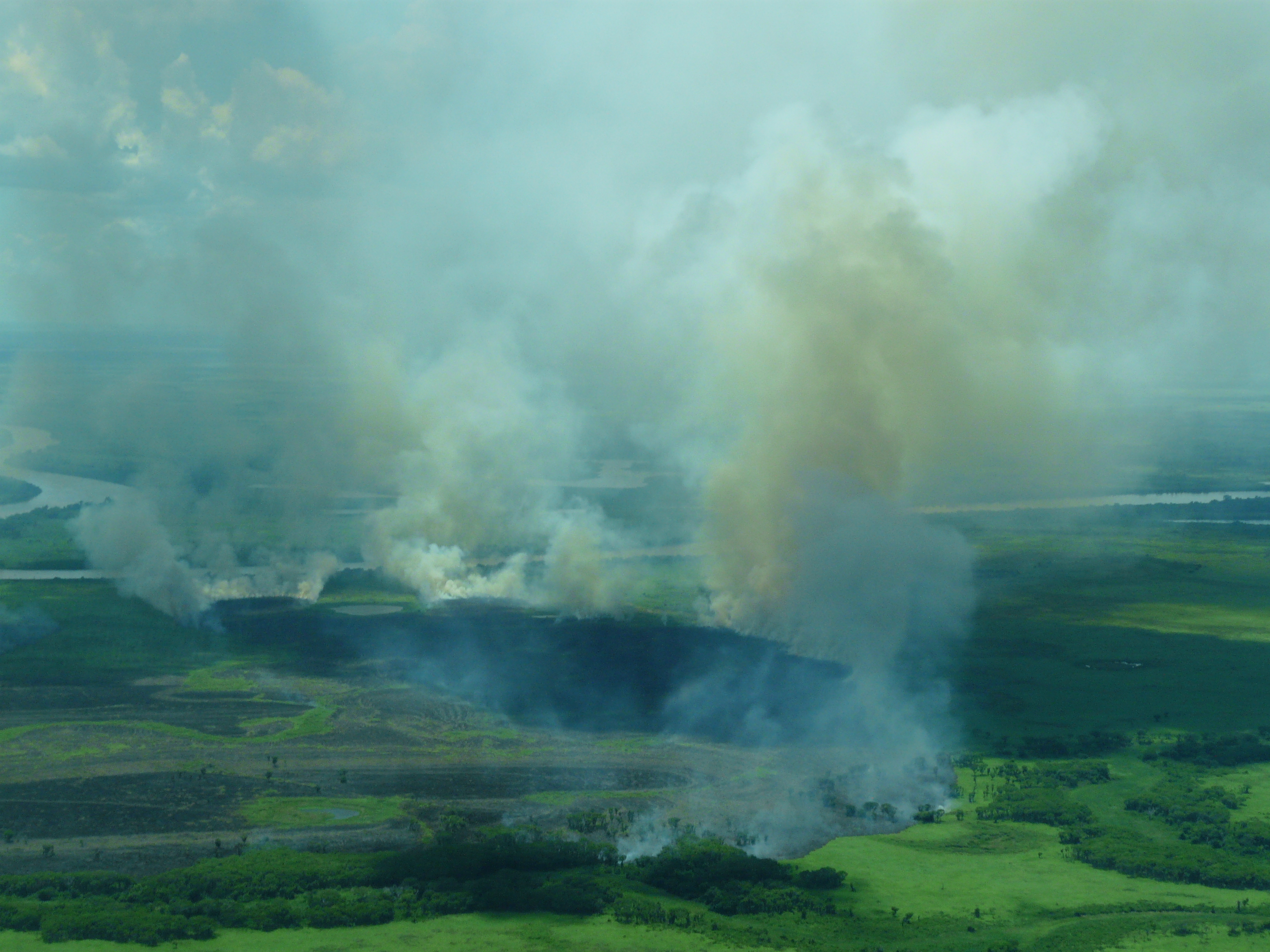
![The Pantanal](https://latest.earthhour.org/hubfs/Large_WW1124463.jpg) **

Forest fires Cerrado Pantanal side Bolivia. Located between the Amazon, Atlantic Forests and Pantanal.

*©Marius Brants / WWF*

×

![The Pantanal](https://latest.earthhour.org/hubfs/Large_WW1124463.jpg)

Forest fires Cerrado Pantanal side Bolivia. Located between the Amazon, Atlantic Forests and Pantanal.

*©Marius Brants / WWF*

### Receive updates like this direct into your inbox. Subscribe today.

![wwf](https://latest.earthhour.org/hs-fs/hubfs/WWF_January2019%20Theme/Images/wwf.png?width=53&name=wwf.png "wwf")

Building a future in which people live in harmony with nature.

© 2017 WWF - World Wide Fund For Nature© 1986 Panda Symbol WWF – World Wide Fund For Nature (formerly World Wildlife Fund)® “WWF” is a WWF Registered Trademark [Creative Commons license](https://creativecommons.org/licenses/by-nc/4.0/deed.en).